
















Vehicle Tracking Explained: How GPS Trackers Actually Work
Jun
Table of Contents
A car is stolen in the UK roughly every few minutes, and the vehicles most at risk are often the ones with the cleverest electronics. It is little wonder, then, that “vehicle tracking” has moved from a fleet-management term into something ordinary drivers, parents, pet owners and small businesses now search for by name. But what is vehicle tracking, exactly — and how does it actually work once the device is fitted?
This guide answers that in full. We will cover what a vehicle tracker is, the technology that lets it pinpoint a location, the different types you can buy, what you can see and do with the data, whether it is legal in the UK, and how to choose a system that fits your needs. By the end you will understand the subject well enough to make a confident decision.
What is vehicle tracking?
Vehicle tracking is the use of a small electronic device, fitted to or carried in a vehicle, to record and report its location over time. A modern tracker continuously works out where it is, then sends that information to a secure server, which you view through an app or web portal on your phone, tablet or computer.
In practice it means three things: you can see where a vehicle is right now (live tracking), where it has been (route history), and you can be alerted automatically when something happens — the vehicle moves, speeds, leaves a defined area, or is tampered with. That combination is what separates a true GPS tracker from a simple Bluetooth tag, which only tells you whether something is near your own phone.
The term covers a wide range of uses. The same core technology protects a single family car, monitors a fleet of delivery vans, helps recover a stolen motorbike, and keeps tabs on a caravan or a piece of construction plant. What changes is the device format and the features, not the underlying principle.
How does GPS vehicle tracking work?
The “GPS” in GPS tracking refers to the Global Positioning System — a network of satellites operated by the United States — though most modern devices also read other satellite constellations such as Europe’s Galileo and Russia’s GLONASS. Collectively these are known as GNSS (Global Navigation Satellite Systems), and using several at once improves accuracy and reliability.
The process happens in four steps, repeated continuously:
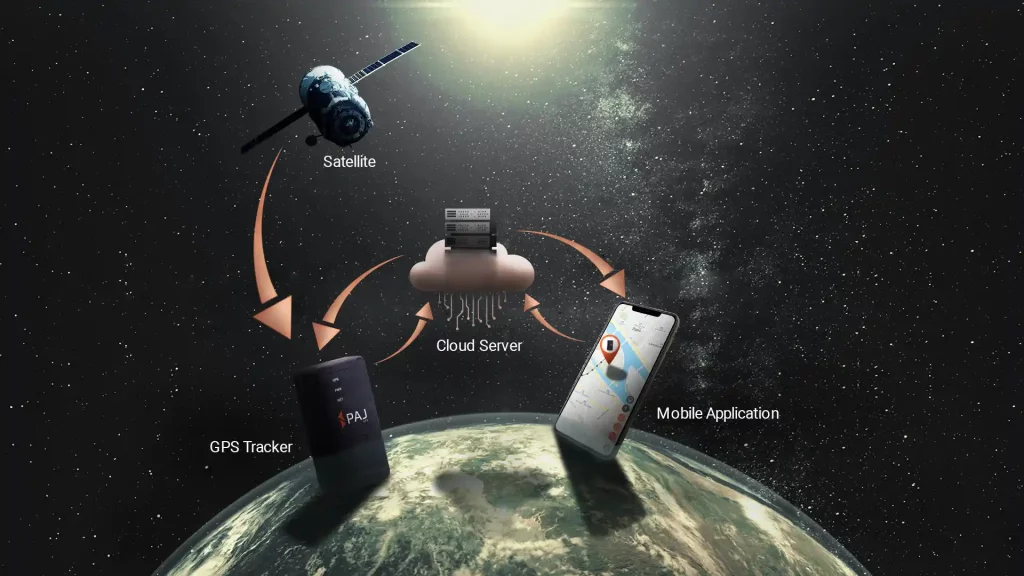
- The tracker receives satellite signals. A GPS module inside the device listens to signals from multiple satellites overhead. By measuring how long each signal takes to arrive, it calculates its own position through a process called trilateration. A good consumer tracker is accurate to within roughly five metres in open conditions.
- It works out the location. The device converts those signals into a precise set of coordinates — latitude and longitude — along with the time, and often speed and direction of travel.
- It transmits the data over the mobile network. This is the part people often miss. The tracker contains a SIM card and sends its location over the cellular network, just as a mobile phone does. Newer devices use the 4G network for faster, more reliable transmission and broad coverage; older ones rely on 2G. The quality of this mobile connection matters as much as the GPS signal itself.
- You view it in an app or portal. The data lands on a secure server and appears in a tracking platform — for PAJ devices, that is the Finder Portal, accessible from any browser or via the iOS and Android app. There you see the live position on a map, replay past journeys, and configure alerts.
Because the device handles its own satellite positioning and its own mobile connection, it works independently of the vehicle’s own systems. That is why a battery-powered tracker can keep reporting even after a thief disconnects everything else.
The main types of vehicle tracker
Trackers differ mainly in how they are powered and connected. Choosing the right format is the single biggest decision you will make.
Battery-powered (portable) trackers
These are self-contained units with a rechargeable internal battery. They need no wiring, so you simply charge the device, switch it on and place it in the vehicle. Many, such as PAJ’s POWER Finder 4G magnetic tracker, have a magnetic back so they attach firmly to a metal surface. They are the most flexible option — easy to move between vehicles — and a popular choice as a hidden tracker for a car. The trade-off is that the battery must be recharged periodically, though devices warn you when it runs low.
Hardwired trackers
These connect directly to the vehicle’s electrical system, drawing power from the battery so they never need recharging. They are installed out of sight and are well suited to permanent, long-term protection of a single vehicle. Fitting takes a little more effort, but many include a small backup battery that triggers a removal alert if the device is disconnected.
OBD plug-in trackers
Almost every car built since the early 2000s has an OBD (On-Board Diagnostics) port — the same socket a garage uses for diagnostics. An OBD tracker simply plugs in and powers on automatically, giving you the simplicity of a battery device with the permanence of a wired one. The port is usually found in the footwell near the steering column.
For a fuller comparison of formats and the costs involved, see our guide to how much a car tracker costs in the UK.
What can you see and do with a vehicle tracker?
A modern tracking platform is far more than a dot on a map. The features below are what make the technology genuinely useful day to day.
- Live location. See exactly where the vehicle is at this moment, refreshed in near real time.
- Route history. Replay past journeys, including stops, speeds and times. PAJ’s portal stores up to 365 days of history, which is valuable for everything from expense logging to confirming a vehicle’s movements.
- Geofencing. Draw a virtual boundary on the map — your home, a depot, a school — and get an instant alert when the vehicle enters or leaves it. This is one of the most popular features for parents and businesses alike.
- Speed alerts. Be notified if a vehicle exceeds a set speed, useful for monitoring a fleet driver or a newly qualified teenager.
- Tamper and removal alerts. Devices warn you if they are moved, vibrated, lifted from a magnetic surface, or disconnected from power.
- Ignition alerts. Know the moment the engine is started — an early warning of unauthorised use.
- Multi-vehicle management. A single account can monitor a whole family’s cars or an entire fleet from one view.
Alerts typically arrive as a push notification and an email at no extra cost, so you can act quickly — including sharing a live location with the police if a vehicle is taken.
What is vehicle tracking used for?
The breadth of use cases is what has driven the technology into the mainstream:
- Theft protection and recovery of cars, motorbikes, vans and caravans — the most common reason private owners buy a car tracking device.
- Fleet and business management, where live tracking improves routing, safety and accountability across many vehicles.
- Asset protection for trailers, plant, tools and other valuable equipment.
- Peace of mind for families, whether that is a tracker for a child, an elderly relative, or simply knowing a young driver arrived safely.
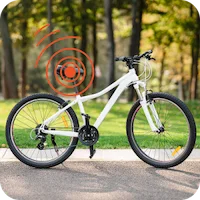
- Recreation, from securing a bicycle or boat to logging routes.
The same device that protects a £40,000 car can just as easily safeguard a suitcase or a pet — the principles are identical, only the form factor changes.
Is vehicle tracking legal in the UK?
In short: tracking a vehicle you own is entirely legal. You are free to fit a tracker to your own car, van, motorbike or fleet vehicles, and to monitor company vehicles provided you inform the people who drive them.
Where the law becomes important is tracking something — or someone — that is not yours. Placing a tracker on another adult’s vehicle without their knowledge or consent can breach data-protection rules and, depending on the circumstances, may amount to harassment or stalking. Tracking a partner, ex-partner or any other adult covertly is not a legitimate use and can carry serious legal consequences.
The safe principle is consent and legitimate interest: track your own property, your own children, or vehicles and people where there is a clear, lawful and agreed reason to do so. Businesses tracking staff vehicles should have a transparent policy and tell their drivers. If you are ever unsure, the Information Commissioner’s Office (ICO) publishes guidance on personal data, and you should check the current rules for your situation.
This section is general information, not legal advice. We cover the topic in depth in our guide to GPS tracker laws in the UK.
How much does vehicle tracking cost?
A GPS tracking system has two parts: the device and the subscription. The device is a one-off purchase — PAJ’s car trackers start at around £40 — while the subscription covers the mobile data and the tracking platform that make live tracking possible. This is why a credible GPS tracker is not “free” or subscription-less: the SIM inside it needs an active data plan to transmit, including when the vehicle travels abroad.
Subscriptions are usually offered monthly or on discounted yearly terms, and good providers let you cancel or pause. We break down the full picture in our dedicated guide to car tracker costs
How to choose the right vehicle tracker
When comparing options, weigh these five factors:
- Connection type. Battery, hardwired or OBD — match this to whether you want flexibility or a permanent fit-and-forget install.
- Network. Favour a 4G device for reliable, future-proof transmission, ideally with a SIM that works across Europe at no extra cost.
- Coverage. Check the device tracks where you need it to, including abroad if you travel.
- App and features. Look for live tracking, route history, geofencing and the specific alerts that matter to you, in an interface you find easy to use. Many providers, PAJ included, offer a demo account so you can try the portal before buying.
- Subscription flexibility. Clear pricing, the ability to cancel or pause, and no hidden roaming fees.
If you mainly want discreet protection for a single car, a portable magnetic device is a strong all-rounder; for a fleet, a hardwired or OBD device with central management makes more sense.
The bottom line
Vehicle tracking is, at its core, a simple idea: a small device works out where it is using satellites, sends that position over the mobile network, and shows it to you in an app — along with history and automatic alerts. That simple chain underpins everything from recovering a stolen car to managing a national fleet.
The technology is mature, affordable and, used responsibly on your own property, completely legal. The main decisions are practical ones: the type of device, the network, and the features and subscription that suit how you will use it.
If you would like to see how it works in practice, you can explore the Finder Portal demo or browse PAJ’s range of GPS trackers to find the right fit for your vehicle.







 DE
DE FR
FR ES
ES IT
IT PT
PT USA
USA AUS
AUS