











4G GPS Tracker vs. AirTag: The Ultimate Showdown for UK Bike Protection
Dec
One of our client talks about the morning he lost his bike outside a train station. He locked it up before his train and carried on with his day. Nothing unusual. When he came back in the evening, he noticed that the space he had left the bike in sat empty, and he said it felt like someone had knocked the wind out of him.
He checked the small Bluetooth tag he had tucked under the frame. It had helped him feel safer for months, so he opened the app with a tiny bit of hope. The screen loaded and showed the last point where the bike sat that morning. There was no movement and no trail. Just a single dot that told him nothing about where it had gone.
He told us later that the worst part wasn’t the cost. It was the helpless feeling. He kept thinking, If I could see where it moved, even once, I might have had a chance. But he never got a live signal, and the bike vanished within minutes.
How AirTags (Try) to Track a Bike
AirTags give many riders a slight feeling of safety. They sit on a bike, stay out of sight, and update through nearby iPhones. On a typical day, that’s fine. The problem starts the moment your bike disappears, and you need information in a hurry as to where the hell your bike is.
The problem with AirTags is that they use Bluetooth, not GPS. They only update when another phone passes close enough to connect to them. If a thief moves your bike through a quiet street or into a metal unit, the signal can instantly stop. We’ve heard too plenty of stories of cyclists who describe that sinking feeling when the map freezes and refuses to show any movement.
Apple’s safety alerts add even more pressure, which is excellent if you are being stalked, as it warns people when an unknown AirTag travels with them. The only issue with that is that the thief will also get an alert that someone is with them. They can easily search for the tag and remove it.
The issue is that AirTags work for lost keys or your wallet, but they struggle with stolen bikes.
Why AirTags Are Not The Solution
- They rely on nearby phones
- They stop updating indoors
- They alert thieves
- They struggle to show live movement
How a 4G Tracker Works
A 4G tracker connects straight to the mobile network, so it reports location without waiting for another phone to pass by. It can pick up a signal in vans, car parks, garages, and long underground corridors, and that signal makes a massive difference when someone needs answers fast.
A few months ago, a cyclist bought a 4G tracker from us and told us how their e-bike got taken outside a gym in Birmingham. The thief loaded it into a van, but the 4G tracker kept updating every few seconds. The rider watched the route in real time and shared it with the police. They recovered the bike the same evening after a quick knock on the thief’s door. Stories like that remind us why live tracking matters.
A 4G tracker gives precise GPS accuracy, works across the UK and abroad, and stays hidden. It never sends alerts that warn thieves like an AirTag would.
Say Hello To The PAJ LED BICYCLE Finder 4G
We meet many riders who want a simple promise, that if their bike goes missing, they want to know where it is. That’s the idea behind the PAJ LED BICYCLE Finder 4G.
We focused on the things that matter in the moment your stomach drops, and you open your tracking app with shaky hands. You need the tracker to wake up, hold, and tell you the truth about where your bike actually is.
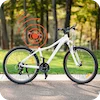
The LED unit mounts cleanly on the bike and blends in, looking like a normal light. It keeps feeding live updates through the 4G network. That constant signal gives you a sense of control, even when the situation feels out of your hands.
Here are the features
- Live GPS tracking with accuracy up to five metres
- Up to 12 days of battery in daily use
- Up to 20 days in standby
- Road-approved LED housing
- IP67 waterproof protection
- Alerts for vibration, falls, speed, low battery, power-off attempts, and geo-fence
- Coverage in 100+ countries through 4G
- No Bluetooth signal that gives away its location
AirTag vs. 4G (What Actually Happens in Real Scenarios)
When we compare the two in real situations, the difference is clear.
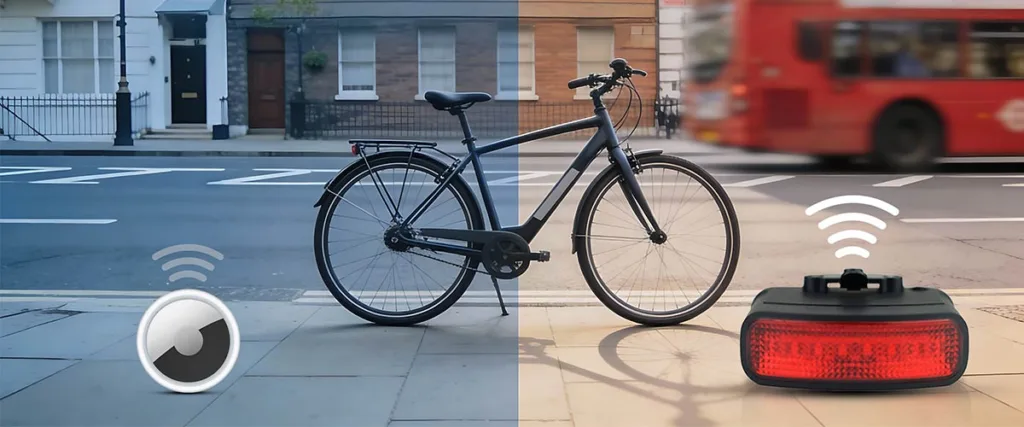
AirTags rely on nearby iPhones to send updates, so they only send a signal when someone passes close enough. A 4G tracker works on its own. It connects straight to the network and keeps reporting, even when the bike leaves busy areas.
AirTags often fall silent once a thief puts the bike in a van or a locked room. The signal stops, and you lose the trail. A 4G tracker keeps its signal, updating constantly. Those updates give you something tangible to follow.
Another problem comes from Apple’s safety alerts. They warn thieves that an AirTag is attached to the bike. The thief finds it and removes it. A 4G tracker stays quiet while still sending live movement data.
AirTags suit keys and small items. A 4G tracker suits a stolen bike that can travel a long way in minutes.
Situations Where 4G Makes All the Difference
We hear the same pattern from riders who lose their bikes. A thief lifts it into a van, shuts the doors, and the Bluetooth tag falls silent. Some bikes end up in basements or garages where no phone signal reaches. Others vanish during long station parking, where the trail breaks the moment the rack empties. Rural rides create another problem, because hardly any phones pass close enough to pick up weak signals.
A 4G tracker keeps talking throughout these moments. It holds the connection and gives you something tangible to follow.
Why a Purpose-Built Tracker Wins Every Time
You can rely on luck, or you can rely on a live signal. Bluetooth tags offer the first option. They fade in and out, and they leave you hoping someone walks past at the right time. A purpose-built GPS tracker gives you certainty instead of hope. It sends live updates, stores routes, reacts to movement, and covers a huge area without depending on anyone else.
The PAJ LED BICYCLE Finder 4G gives riders a real layer of defence during the moments that matter most. If you want true protection, you need a tracker built for the job.






 DE
DE FR
FR ES
ES IT
IT PT
PT USA
USA AUS
AUS